1Recognizing the hazards left behind
After a serious injury, the obvious hazard is blood and other potentially infectious material. OSHA covers this under 29 CFR 1910.1030. Other hazards are less obvious. The machine that caused the injury may still hold stored energy. Hydraulic fluid or coolant may be mixed into the spill. There may be sharp debris from guards or tools, and slippery absorbents. Fluid may have traveled along a conveyor or into a floor drain. Confined spaces, such as pits, tanks, and vaults, add air hazards that require testing and permits. A scene holds several kinds of hazards at once, not just a biohazard. Seeing that is the basis for every choice that follows. That includes who goes in, what they wear, and which products are safe to use.
2Who controls the scene and when it is released
Right after the accident, the facility controls access. But others may share or take over that control. OSHA may want the area left as it is after a reportable event. Police or a medical examiner may hold the scene after a death. Your company's legal team or insurer may ask that nothing be moved until their investigator has looked. Your own team looking for the root cause needs the same undisturbed scene. Scene control means one named person tracks every hold. That person records who released each hold and when. They let people in only after the last hold is lifted. Cleaning too early can destroy evidence, hurt a claim, and raise questions about intent. Waiting is uncomfortable, but it is almost always cheaper.
3Containment before anything else
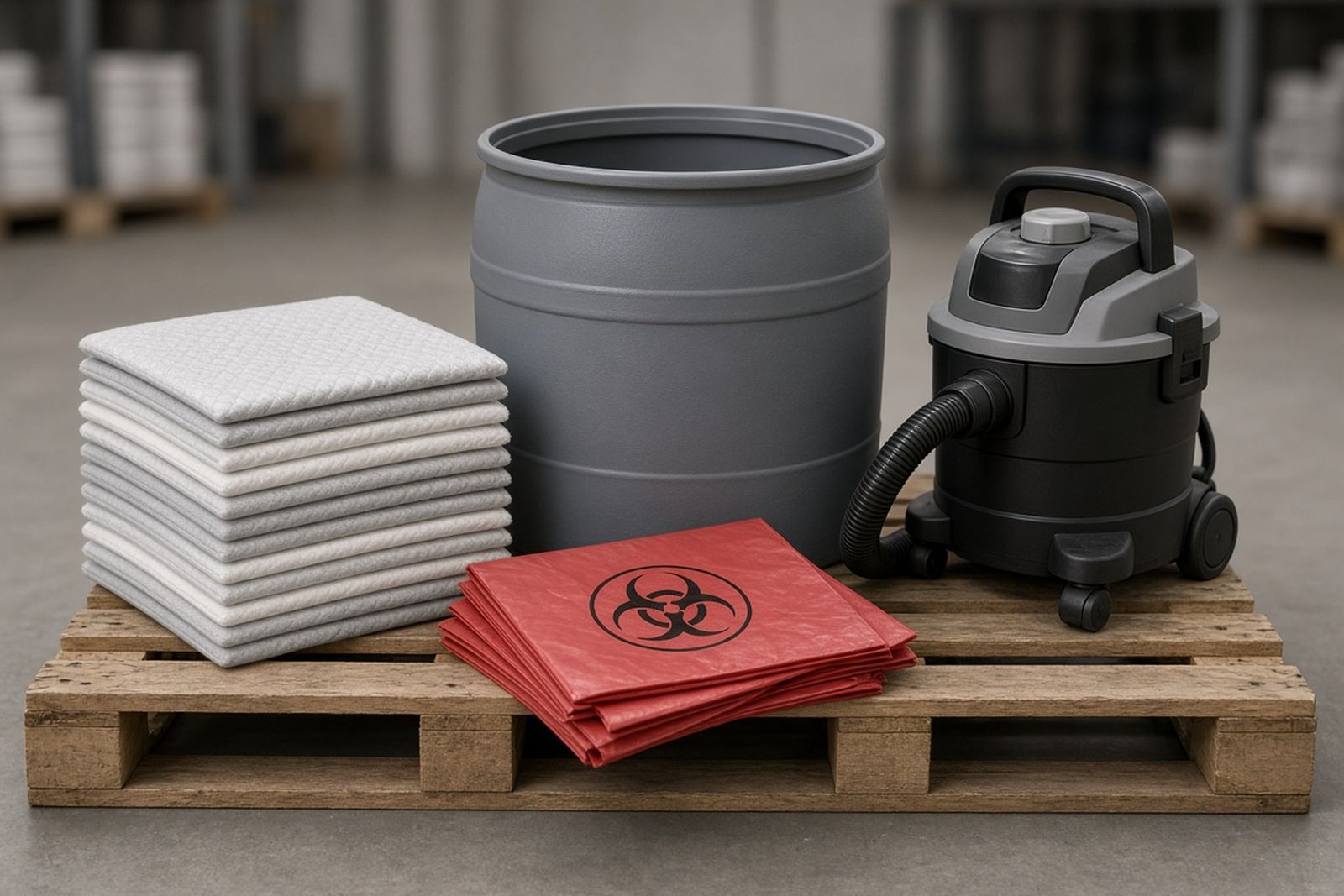
Sealing off the area keeps a local accident from becoming a plant-wide one. In practice, you block off the area with enough extra room for splashes and footprints. You stop conveyors and material moving through the zone. You cover or block floor drains so nothing enters the wastewater system without permission. You control foot traffic, so curious coworkers do not carry contamination into clean areas on their boots. If chemical fumes are possible, this also includes airflow. Fans that push air into busy work bays spread the problem. Place absorbents with care instead of scattering them. Everything used to seal off the area becomes waste. Treat it as soiled until it has been tested and sorted.
4Cleaning is not disinfection
Cleaning removes visible soil and body matter using detergent, scrubbing, and extraction. Disinfecting uses a registered product on a surface that is already clean. The product must stay wet for the contact time on its label to reduce germs. Disinfectant sprayed onto blood or grease does not reach the surface and mostly fails. On industrial equipment, the order matters even more. Textured metal, guards, control panels, and gaskets hide soil that a wipe misses. Chemical residues from the process can also react with cleaners. So the product choice must take into account the safety data sheets for what was in the area. A final check confirms that both steps actually happened. That check may be visual, a swab test, or a lab test.
5Where the waste goes
Material soiled with blood usually follows the regulated medical waste path. That means labeled containers, a licensed hauler, and treatment records. Absorbents and debris that touched process chemicals may instead count as hazardous waste under federal rules. That brings test profiles, the waste shipping record, and duties that belong to the facility, not the contractor. Some items are mixed. Mixed waste needs to be tested and sorted, not guessed at. Sharp objects, including broken tools with blood on them, need containers that cannot be punctured. Ordinary trash is only for material that never touched anything regulated. Rules vary by state and county. Check the path with the local authority before the first container leaves the dock.
6Documenting and verifying the outcome
Good records turn a stressful event into a record you can defend. Start with the timeline. Note the time of injury and the time of any required OSHA report. Note when holds were placed and lifted, when the contractor arrived, and the sign-off. Add photos before, during, and after each stage, taken from the same spots. Keep product names, mixing ratios, and contact times. Keep the contractor's written plan, the waste shipping records, and any test results. The final check is when someone with authority confirms the agreed standards were met. They record it with a name and time. The facility decides when equipment returns to service, not the vendor. A complete file answers auditors, adjusters, and your own safety committee without relying on anyone's memory.