Industrial Accident Cleanup for Plants and Job Sites
Clear next steps for managers after an injury, spill, or machine incident.
This page is for plant managers, safety leads, site supervisors, and shop owners after someone is hurt or a material is released at work. It covers the first hour, the cleanup itself, cost and insurance, and how to vet a provider.
Get an email reply about industrial accident cleanup
Send a short message to the follow-up inbox. A coordinator can reply by email. This form does not send emergency help; call 911 first if anyone is in danger.
What should a supervisor do right after an accident?
The injured worker comes first, then the scene. These steps keep others safe and protect the record you will need later.
- 1Get care for the injured worker and call 911. Send one person to meet responders at the gate and guide them in.
- 2Shut down the machine or process involved and lock out its power so no one can restart it. Keep the key or lock with the person in charge.
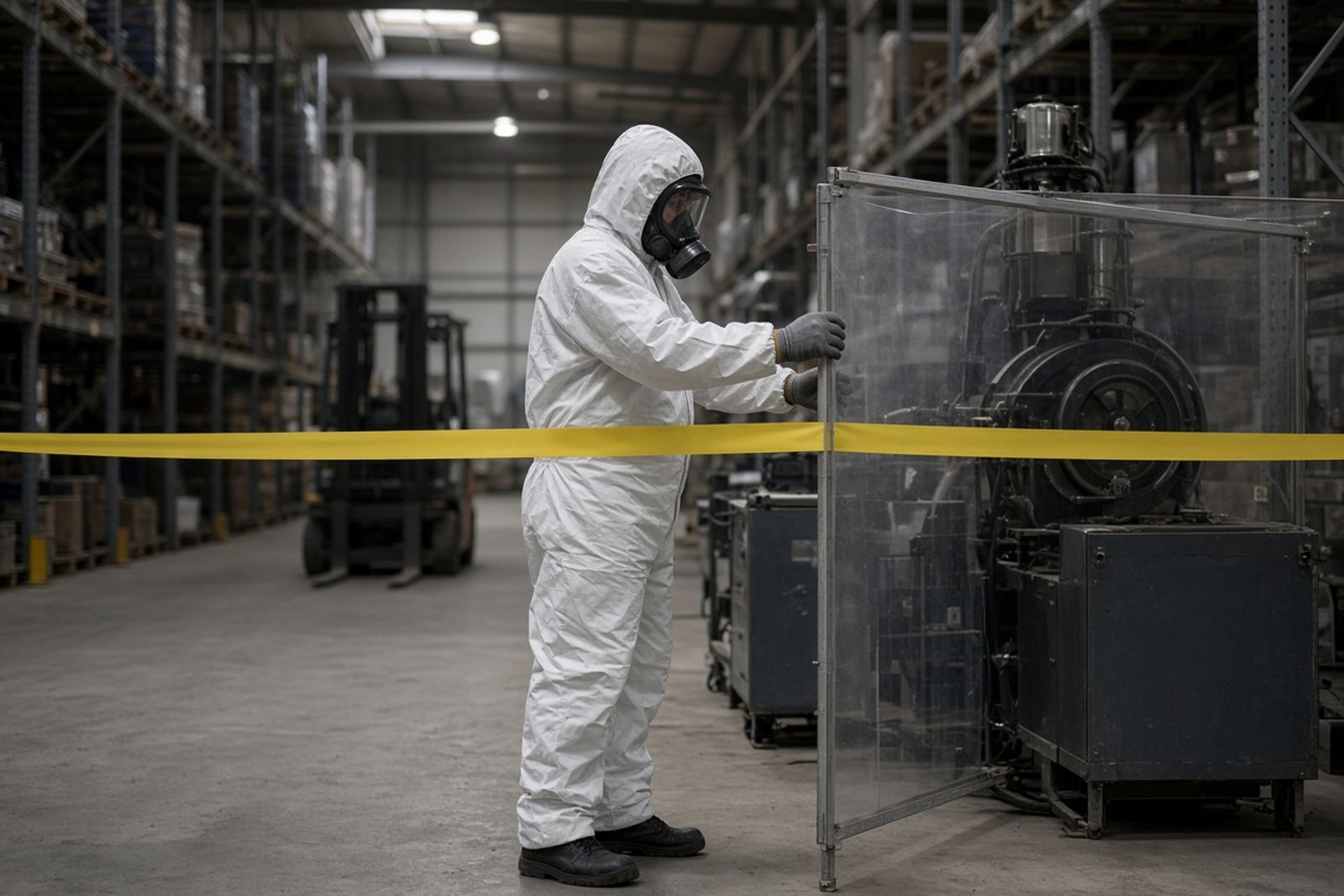
- 3Rope off the area and keep people out. Leave it as it is until police, OSHA, or your insurer have seen it or released it, and take photos.
- 4Federal OSHA requires a report within 8 hours for a work-related death and within 24 hours for an in-patient hospital stay, amputation, or loss of an eye. States with their own OSHA plans may add rules.
- 5Stop spread without washing anything away. Cover nearby floor drains if it is safe, and do not hose the area down.
- 6Pull the safety data sheet for any chemical involved, and list everyone who was nearby or helped. The cleanup crew and your incident report both need this.
Call 911 for any injury. For chemical exposure questions, call Poison Control at 1-800-222-1222. A release into the air, water, or soil may need to be reported to the National Response Center at 1-800-424-8802 and your state environmental agency.
Want this as a checklist for your situation? Try the first 24 hours planner.
What does industrial accident cleanup involve?
It is the cleanup of blood, body fluids, chemicals, or both after a workplace injury or release. The crew works on floors, machines, tools, walkways, and sometimes pits or tanks. They remove the hazard, clean and disinfect what stays, and hand the area back so you can decide on restart.
It is not the same as a routine maintenance cleanup. OSHA's bloodborne pathogens rule says only workers trained under your exposure control plan, with proper gear, should handle blood. Chemicals may react with water or with each other. Machines can hold stored energy even when switched off. A crew used to these risks plans each step with your safety team.
This kind of call comes from factories, warehouses, food plants, farms, construction sites, and small machine shops. Common causes include caught-in injuries at a press or conveyor, forklift accidents, falls, and spills from drums or lines. Some scenes involve blood and a chemical at the same time, and those need two separate cleanup and waste paths.
Each type of work is explained step by step on the industrial accident cleanup services page.
Photos
The photos below are stock-style illustrations of industrial cleanup work, not pictures from real incidents.
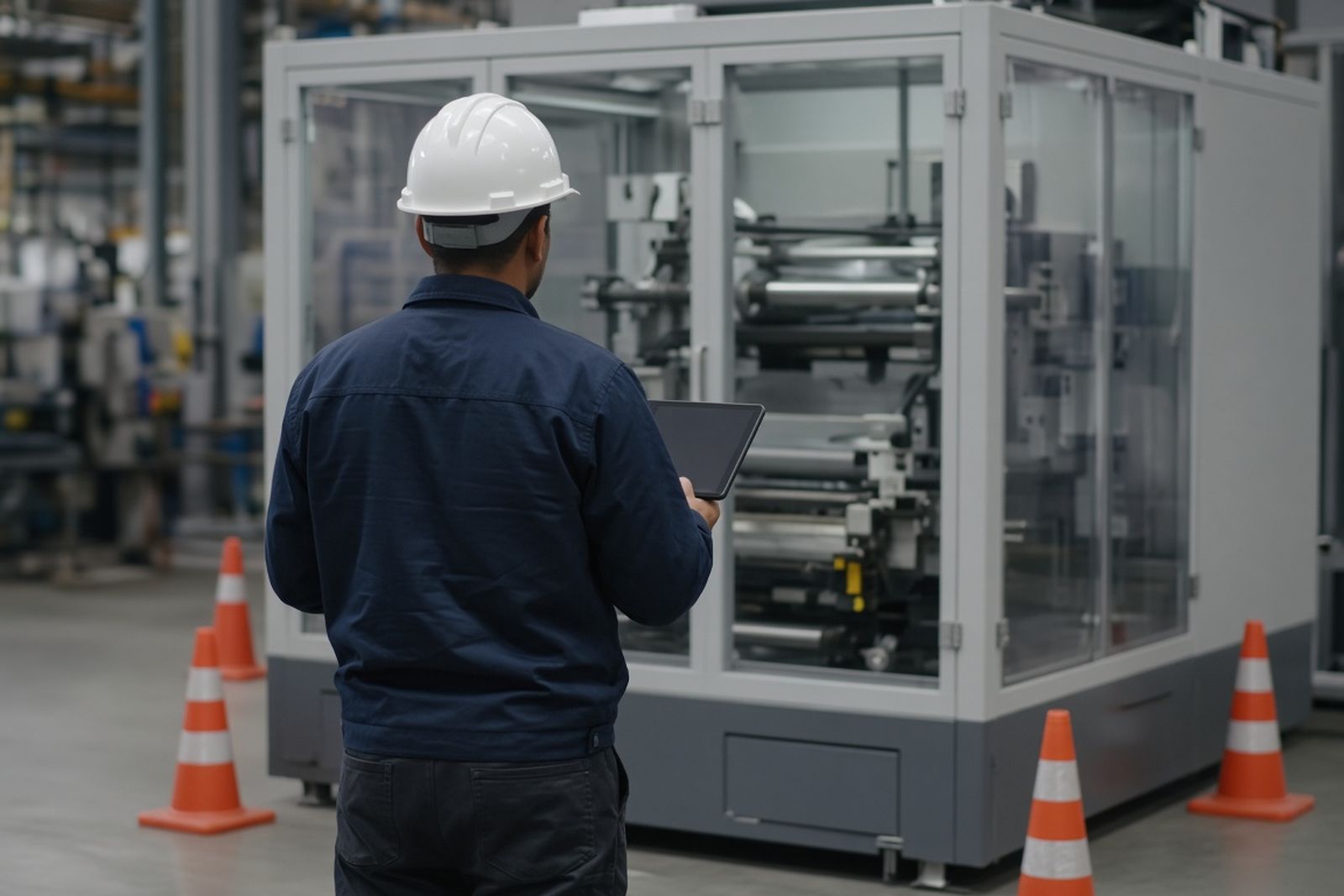
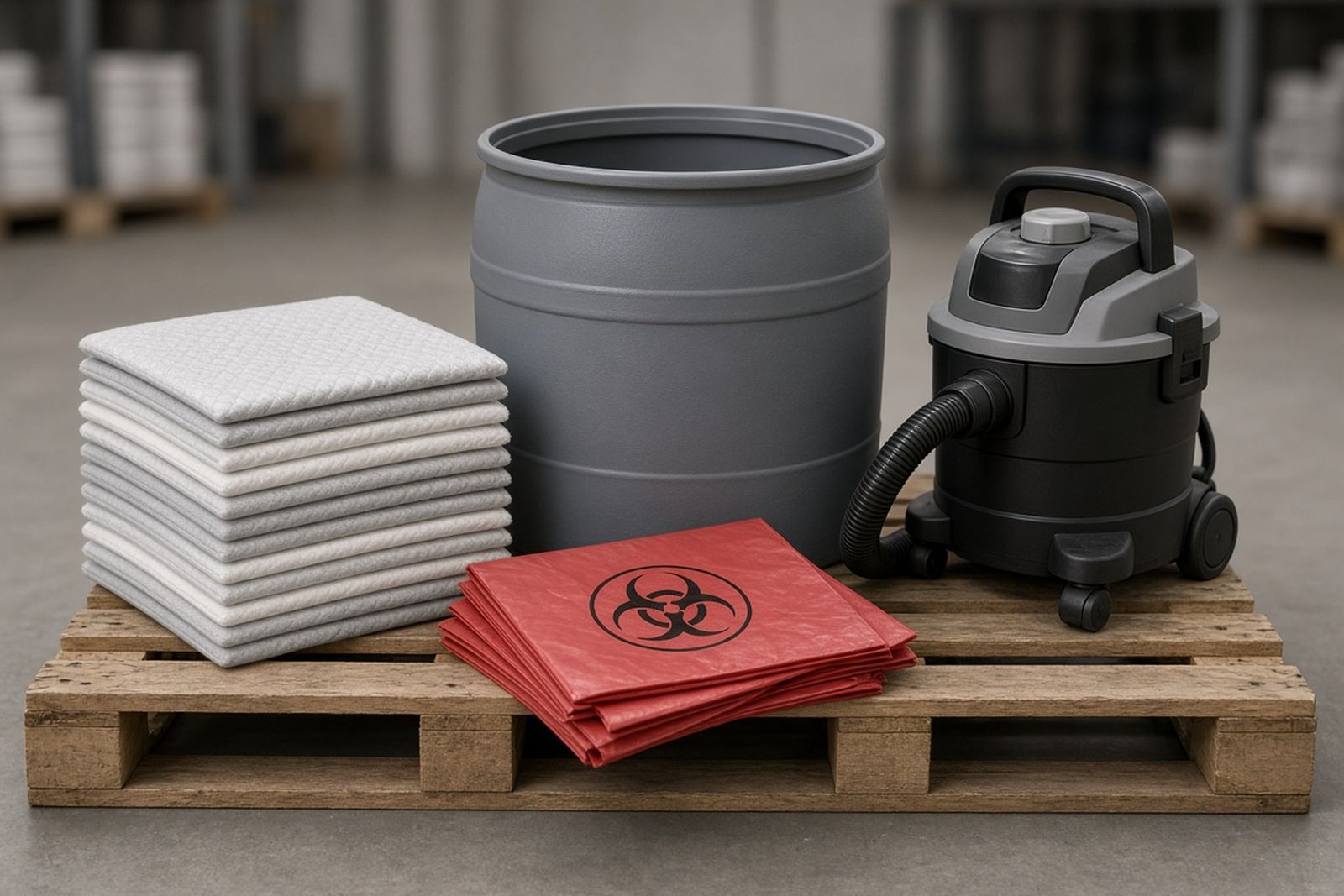
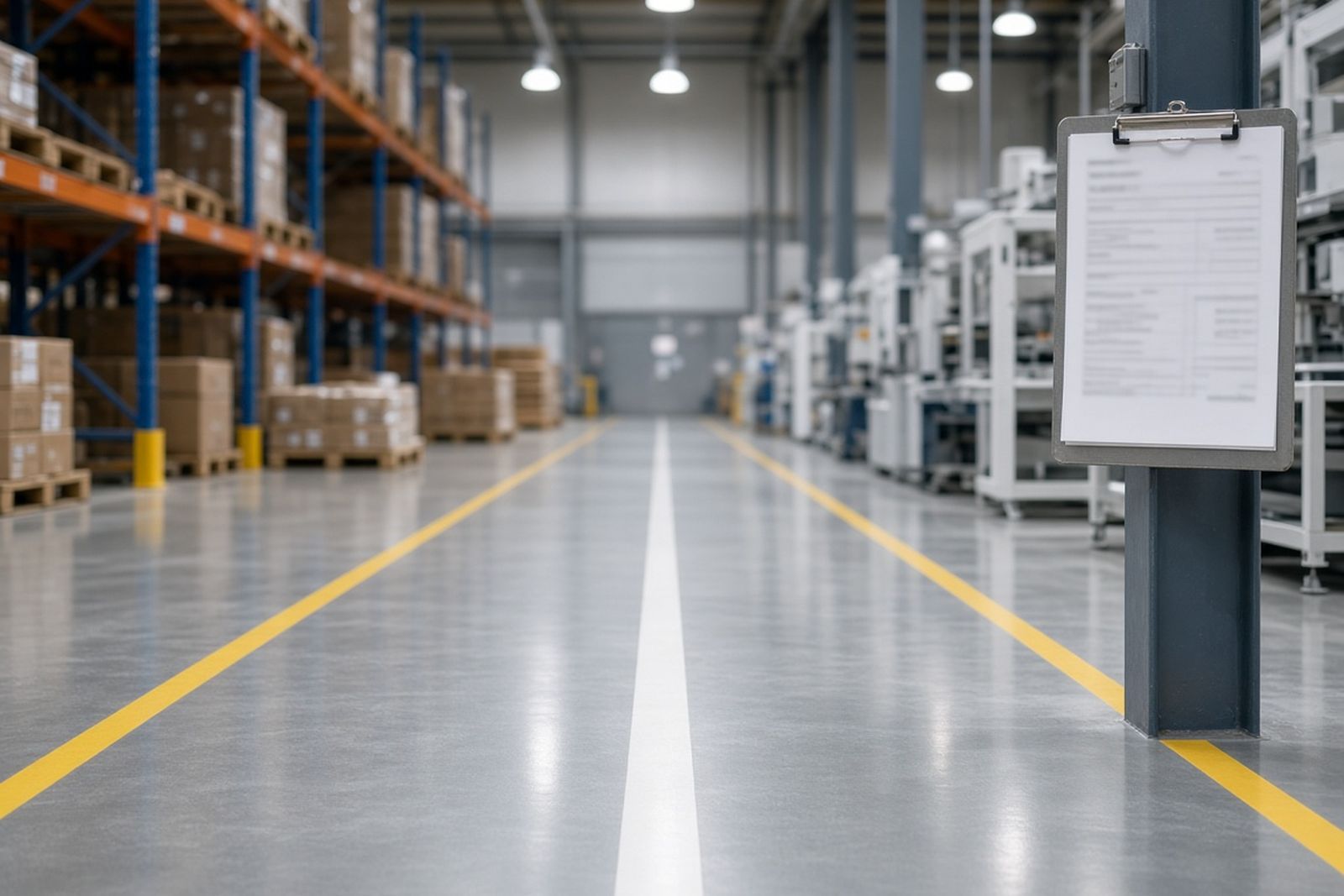
What happens once the crew arrives?
Most jobs follow a set order that fits around your own safety rules. Keep your safety lead involved throughout.
- 1
Safety briefing
The crew meets your safety lead to confirm the scene is released and equipment is locked out. They review the chemicals involved and any site rules.
- 2
Set up zones
A dirty zone, a clean zone, and a spot for taking off gear are marked. Walkways are covered so nothing is tracked through the plant.
- 3
Remove the hazard
Blood and chemicals are picked up with absorbents and tools that fit each one. They are kept apart so they do not mix.
- 4
Clean equipment and floors
Machine surfaces, guards, handles, and tools are cleaned, then disinfected or treated as the hazard requires. Parts that need a factory tech are flagged.
- 5
Package the waste
Blood waste goes in medical waste containers. Chemical waste is labeled and stored for a hauler that can take it.
- 6
Walk-through and handover
The crew walks your team through the area and hands over notes. Your team then decides on restart under your own procedures.
Industrial Accident Cleanup by the numbers
When a serious injury shuts down part of a facility, the people making choices are usually operations leaders, not safety experts. It helps them to know a few things. How common are workplace accidents? What does cleanup tend to cost? How do exposures to blood and chemicals actually affect workers? That gives leaders a starting point for judging quotes, timelines, and risk. The figures below come from published sources and are updated apart from this page. Use them to set your expectations before you talk with a contractor, your insurer, or your company's environmental, health, and safety (EHS) team. Treat them as background, not as a forecast for your own accident.
- 355,800
Manufacturing reported 355,800 nonfatal injuries and illnesses in 2023, an incidence rate of 2.8 cases per 100 full-time workers.
Read with care: Total recordable cases; only a portion involve bleeding injuries.
Source: BLS (2023)United States private manufacturing, 2023
- 224,450
Exposure to harmful substances or environments produced an annualized 224,450 days-away, restricted or transfer (DART) cases in private industry in 2023-24.
Read with care: Two-year annualized estimate; includes heat, chemical and other exposures.
Source: BLS (2024)United States private industry, 2023-2024 annualized
- 2,888
OSHA issued 2,888 Hazard Communication citations in fiscal 2024, making it the second most-cited standard for the third consecutive year.
Read with care: Preliminary count as of Sept. 5, 2024; state-plan citations excluded.
Source: OSHA (via Safety+Health) (2024)United States federal OSHA citations, FY2024 (Oct 2023-Sep 2024)
- 586
The Chemical Safety Board received 586 accidental release reports between March 2020 and December 2025; 54.8% involved serious injuries and 15.4% fatalities.
Read with care: Only releases causing death, serious injury or substantial damage are reportable; minor spills are excluded.
Source: U.S. Chemical Safety Board (via Safety+Health) (2025)United States, CSB-reportable releases, Mar 2020-Dec 2025
- 779
Contact with objects and equipment killed 779 U.S. workers in 2023, the second-largest fatal event category after transportation.
Read with care: Includes struck-by, caught-in and crushing events across all sectors, not only industrial plants.
Source: BLS (2023)United States, 2023, all industries
- 3.3 billion pounds
Facilities released 3.3 billion pounds of Toxics Release Inventory chemicals in 2023, 21% less than in 2014.
Read with care: Includes permitted routine releases, not just accidents; excludes natural gas processing for trend comparison.
Source: EPA (2023)United States, TRI-reporting facilities, reporting year 2023
These figures are public research and agency data, not this network's own job records. Keep each number with its population, year and limits; none of them predicts cost, timing or outcome at a specific property.
What drives the cost, and who pays?
The biggest factors are what was released and where it went. A small blood spill on a sealed floor is a short job. Blood inside a conveyor or press, or a chemical that ran under racking, takes much longer. Confined-space entry, waste volume, off-hours work, and testing also shape the bill.
Several policies may play a part. Workers' compensation covers the injured worker's care and lost wages, but usually not the cleanup itself. Your property policy may cover cleanup, though pollution exclusions often limit chemical claims. A separate pollution policy may respond to releases. If a contractor or equipment maker was at fault, their insurer may be involved. Tell each insurer early and ask what they need.
Keep your incident report, photos from before and after cleanup, and the crew's written scope. Add waste disposal receipts and any hazardous waste shipping papers, which prove where chemical waste went. Keep the restart sign-off and an invoice split by area. These papers support insurance claims, OSHA questions, and your own review of what went wrong.
How do you vet a cleanup provider?
The right provider fits into your safety program instead of working around it. Ask these questions before you let a crew on site.
Questions to ask
- How does your crew work with our lockout procedures? They should follow your rules and add their own locks.
- What training does the crew have for blood and for chemicals? Ask for bloodborne pathogens training and, for chemical work, OSHA's hazardous waste and emergency response training.
- Can you handle permit-required confined spaces? That means a written permit, an attendant, air testing, and a rescue plan.
- How will you keep blood waste and chemical waste apart, and who will be named as the waste generator? This affects your records.
- Will you give a written scope and a handover checklist we can use for restart? Your team makes the final call.
- Can you show proof of insurance and give references from other industrial clients? Check that the coverage fits plant work.
Warning signs
- Suggests hosing blood or chemicals into floor drains.
- Wants to start before equipment is locked out.
- Plans to put every kind of waste into red biohazard bags.
- Cannot show training records or a certificate of insurance.
Checking a company you already have in mind? Work through the provider vetting checklist.
What can your own team handle?
If your company has a bloodborne pathogens program, trained employees with the right gear can clean small drops of blood on sealed floors. That work should follow your written exposure control plan. Workers who were not trained or offered the hepatitis B vaccine should not do it.
Your team still plays a key role when an outside crew does the cleanup. They secure the area, lock out equipment, gather safety data sheets, and keep the incident record.
Usually fine to do yourself
- Have a trained employee clean small blood drops on a sealed floor, using gear from your exposure control plan.
- Lock out equipment, rope off the area, and keep a sign-in list of who enters.
- Gather safety data sheets, photos, and witness names for the incident report.
Leave to a trained crew
- Blood on or inside moving parts, guards, conveyors, or presses.
- Unknown chemicals, mixed chemicals, or any spill that reached a drain.
- Any work inside a pit, tank, vault, or other confined space.
- Scenes where a worker died or was badly hurt.
Not sure where your situation falls? The DIY risk check asks eight yes-or-no questions.
Free industrial accident cleanup planning tools
Cost Range Estimator
Cleanup after a serious industrial injury is priced very differently from a home biohazard job.
Provider Vetting Checklist
Choosing a cleanup contractor for an industrial scene is a buying choice made under pressure.
Insurance Claim Organizer
Insurance after a serious workplace injury is a puzzle with pieces that do not fit neatly.
First 24 Hours Planner
The first day after a serious injury or death on the floor is a string of choices.
Waste & Disposal Classifier
Waste from an industrial accident is rarely just one thing.
DIY or Call a Pro? Risk Check
After a serious injury, someone on your team will suggest that maintenance or the cleaning crew can handle it.
What research has found
Findings from published studies of people and properties in situations like this one. They describe what researchers observed in a specific group; they are not predictions for your case.
People were more willing to shelter in place when imagining themselves already at home.
Flushing lowered measured contaminant levels in some homes, but not all.
Both methods reduced cultured bacterial contamination.
Industrial Accident Cleanup community polls
Every count is a real visitor vote; nothing is seeded or padded. One vote per poll per device, and you can change your answer.
After a serious injury on the floor, what was your hardest early decision?
How did your facility handle cleanup after a serious blood incident?
How would you rate the pressure to restart production after an incident?
Common questions about industrial accident cleanup
Who on site should be the crew's main contact?
Pick one person with authority over the area, often the safety manager or plant manager. That person confirms the scene is released, controls lockout, answers chemical questions, and signs the handover. One contact keeps the crew from getting mixed messages from shift leads. Give the provider their cell number and a backup name.
Can production keep running in other parts of the building?
Often yes, if the work area is sealed off and traffic is routed around it. Forklift paths, shared air systems, and floor drains that pass through the area may limit what stays open. Chemical releases can affect air nearby, so check the safety data sheet. Walk through the plan with the crew lead and your safety manager first.
What if the injured person was a temp worker or contractor?
The host site usually controls the scene and the cleanup, since the accident happened on its floor. The staffing agency or contractor's employer also has duties, such as reporting and workers' compensation. Both may need copies of the incident report. Tell each company right away and agree on who deals with OSHA. The cleanup crew should take direction from one host site contact.
Is a spill of oil or coolant treated like a hazardous chemical?
It depends on what is in it and where it went. Many oils and coolants are not labeled hazardous, but they can still harm drains, soil, and water, and used oil has its own rules. Check the safety data sheet first. If the spill reached a drain, ditch, or soil, ask your state environmental agency whether a report is needed.
Why does the crew ask for our safety data sheets?
A safety data sheet lists what a chemical is, how it reacts, what gear to wear, and how to clean it up. The crew uses it to choose absorbents and cleaners that will not react badly. It also tells them how the waste must be handled. Keep sheets for every chemical in the area handy, not only the one that spilled.
Do tools that touched blood need to be thrown away?
Not always. Hard metal and plastic tools can often be cleaned and then disinfected by a trained crew. Tools with cloth grips, foam, or deep grooves are hard to clean fully and are often replaced. The crew should list which tools were cleaned and which were discarded, and that list belongs in your incident file.
What if blood got on a food production line?
Stop the line and hold any product that may have been exposed. Your food safety plan should say how to decide what gets thrown out. The line must be cleaned, disinfected, and sanitized before food touches it again, with products allowed on food surfaces. Check with your food safety lead and, if needed, the agency that inspects your plant.
More on industrial accident cleanup
Industrial Accident Cleanup services
See how workplace injury cleanup, chemical spill response, equipment cleaning, and confined space work are planned and ordered for plants and job sites.
Costs explained
What drives the price, published cost ranges, and how to read a written quote line by line.
Insurance and payment
Which policies may respond, how to document a claim, and what to do if coverage is denied.
Planning tools
Planners and checklists built for facility managers. They cover cost ranges, contractor checks, insurance steps, first-day actions, waste sorting, and in-house risk.
Community polls
Compare your instincts with other operations and safety leaders on scene holds, restart pressure, choosing a contractor, and supporting affected workers.
Knowledge quiz
Test what you know about spotting hazards, scene control, sealing off areas, disinfecting, waste paths, and records before an accident puts it to use.
Articles and resources
Practical articles on OSHA report deadlines and working with investigators. Others cover sites shared by several employers, planning the restart, and hard lessons other plants learned.
Related guidance sites
Each site covers one situation. If yours overlaps, start with the closest match.

Hazmat Spill Response (Spill Planning Guide)
Plain guidance for chemical, fuel and unknown spills at homes, shops and job sites.

Biohazard Decontamination (Biohazard Care Guide)
Blood, sewage, or a bad outbreak of illness: what to do and whom to call.

Biohazard Waste Transport (Regulated Waste Guide)
How sharps and medical waste get from your back room to a permitted treatment site.
Get answers by email
Send a short message about your industrial accident cleanup situation. Your request is sent to the follow-up inbox. A coordinator can reply by email. There is no obligation.
Your request is sent to the follow-up inbox. A coordinator can reply by email.
If anyone is hurt or in danger, call 911 first.